
Tech
Engines: Shovelhead & Evolution
The two engines of the FXR, what changed between them, and what the factory claimed.
Overview
The FXR had two engines in its regular run: the 80 ci Shovelhead for 1982 and 1983, and the 1340cc Evolution from 1984 to 1994. The CVO FXR2, FXR3 and FXR4 of 1999 and 2000 also used the Evolution, and the last FXR4 was the last Evolution Big Twin (Rider, Sep 2017; Wikipedia, "Harley-Davidson Evolution engine").
Both engines are 45 degree overhead-valve V-twins with the same bore and stroke, 88.8 × 108.0 mm, so both are really about 1339cc or 81.6 ci even though they were sold as the "80" and the "1340" (Cycle World, Dec 1981; Cycle World, Jan 1987; Wikipedia, "Harley-Davidson Evolution engine").
Shovelhead
The Shovelhead was Harley-Davidson's Big Twin engine from 1966 to 1984. It got its name because its rocker covers look a bit like an upside-down coal shovel (Wikipedia, "Harley-Davidson Shovelhead engine").
In the FXR it lived only two full model years. Erik Buell told Hot Bike, "The original shovelhead engine was awful, but the Evo motor came soon" (Hot Bike, "The Saga of the FXR"). A few very early 1984 FXRS and FXRT bikes may also have Shovelheads (shovelhead.us, 1984).
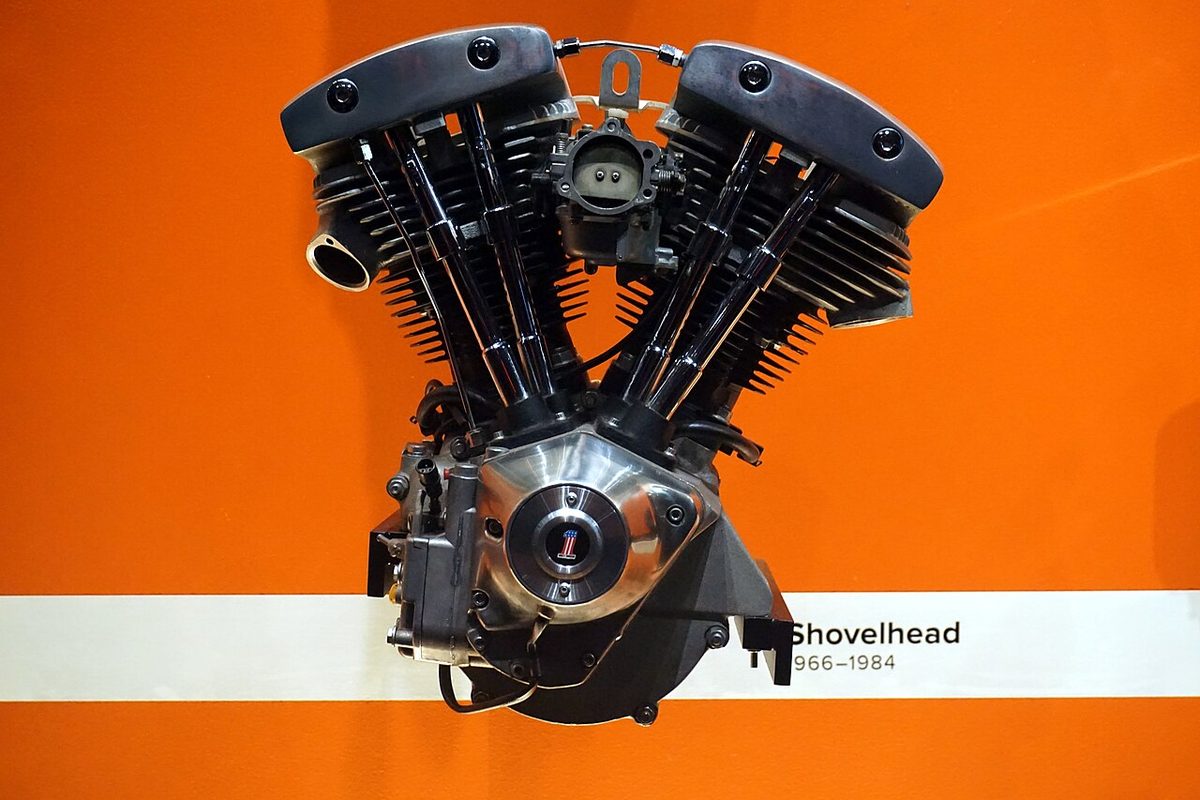
.jpg)
| Item | Value | Source |
|---|---|---|
| Years in FXR | 1982 to 1983 (plus some very early 1984 bikes) | Hot Bike, "Separating the Men From the Boys"; shovelhead.us, 1984 |
| Displacement | 1339cc (81.6 ci), sold as the 80 ci | Cycle World, Dec 1981 |
| Bore × stroke | 88.8 × 108.0 mm | Cycle World, Dec 1981 |
| Compression | 7.4:1 | Cycle World, Dec 1981; Cycle World, Aug 1983 |
| Carburetion | One 38mm Keihin | Cycle World, Dec 1981; Cycle World, Aug 1983 |
| Ignition | Electronic | Cycle World, Dec 1981 |
| Claimed output | 65 bhp at 5400 rpm and 67 lb-ft at 3600 rpm (1983 FXRT). Cycle World's 1982 FXRS test lists 71.5 lb-ft at 3800 rpm with no power figure. | Cycle World, Aug 1983; Cycle World, Dec 1981 |
| Redline | 5400 rpm per the owner's manual, though the tach reads to 6000 | Cycle World, Dec 1981 |
Evolution
The Evolution arrived for 1984. Its heads and cylinders are aluminum rather than cast iron, which saves weight and cools better. Fans sometimes call it the Blockhead for its square rocker boxes (Wikipedia, "Harley-Davidson Evolution engine"; Cycle World, Sep 1984).
It uses a single four-lobe, gear-driven camshaft and hydraulic lifters (Wikipedia, "Harley-Davidson Evolution engine"; Cycle World, Jan 1987). Rider calls it "bulletproof from the start" and notes that it could rev higher than the Shovelhead (Rider, Sep 2017).
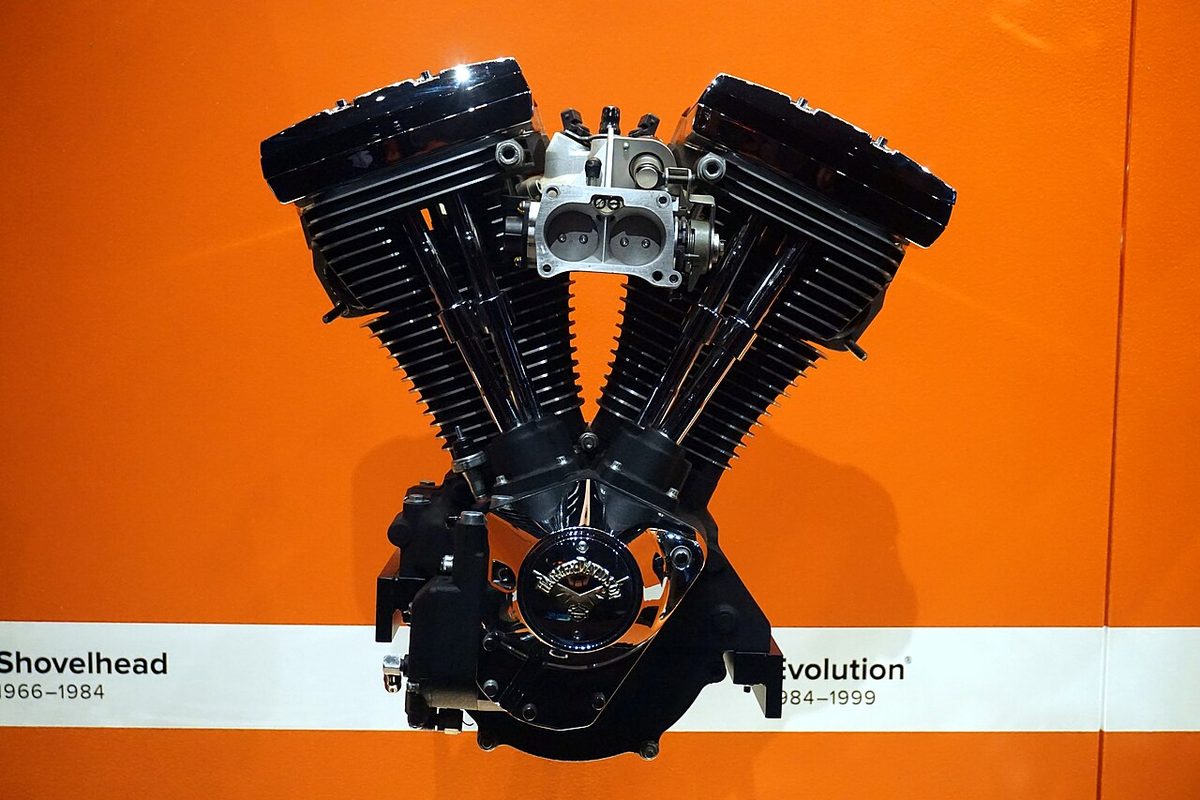
.jpg)
| Item | Value | Source |
|---|---|---|
| Years in FXR | 1984 to 1994; CVO 1999 to 2000 | Rider, Sep 2017; Wikipedia, "Harley-Davidson Evolution engine" |
| Displacement | 1340cc (about 1338.6cc, 81.6 ci) | Cycle World, Jan 1987; Wikipedia, "Harley-Davidson Evolution engine" |
| Bore × stroke | 88.8 × 108.0 mm | Cycle World, Jan 1987 |
| Compression | 8.5:1 | Cycle World, Jan 1987 |
| Carburetion | 34mm Keihin listed in 1987; 40mm Keihin CV from 1989 | Cycle World, Jan 1987; Rider, Sep 2017 |
| Ignition | Transistorized electronic (1984 FXRDG spec box) | Cycle World, Jun 1984 |
| Claimed output | 71.5 bhp at 5000 rpm and 82.5 lb-ft at 3600 rpm (1984 claim, also printed for the 1984 FXRDG); 69 hp at 5000 rpm and 82 lb-ft at 3600 rpm for the FXRS and FXRT in the 1985 owner's manual; 72 bhp at 5200 rpm and 82 lb-ft at 3600 rpm (1987 FXLR) Conflict | Cycle World, Nov 1983; Cycle World, Jun 1984; Harley-Davidson 1985 FLT/FXR Owner's Manual; Cycle World, Jan 1987 |
| Spark plug (1985) | HD 5R6A, gap 0.038 to 0.043 in | Harley-Davidson 1985 FLT/FXR Owner's Manual |
| Measured (rear wheel) | 51.8 hp at 5000 rpm on a stock 1994 Road King, same engine family | Cycle World, May 1994 |
Shovelhead vs Evolution
| Item | Shovelhead | Evolution |
|---|---|---|
| Years in FXR | 1982 to 1983 | 1984 to 1994, CVO 1999 to 2000 |
| Displacement | 1339cc (80 ci) | 1340cc |
| Cylinders / heads | Cast iron | Aluminum heads and cylinders |
| Lifters | unverified | Hydraulic |
| Compression | 7.4:1 | 8.5:1 |
| Claimed output | 65 bhp / 67 lb-ft | 69 to 72 bhp / 82 to 82.5 lb-ft (sources differ) |
| Known weak points | Ran hot, oil leaks and oil use; 1979 on electronic ignition units prone to failure (general Shovelhead history) | 1992 to 1994 caged cam bearing (Rider) |
Sources: Cycle World, Dec 1981; Cycle World, Aug 1983; Cycle World, Nov 1983; Cycle World, Jun 1984; Harley-Davidson 1985 FLT/FXR Owner's Manual; Cycle World, Jan 1987; Wikipedia, "Harley-Davidson Evolution engine"; Wikipedia, "Harley-Davidson Shovelhead engine"; Rider, Sep 2017.
Common issues
Shovelhead heat and oil
Wikipedia's Shovelhead history notes the engine ran hot and had long-running oil leak and oil consumption problems, and that the electronic ignition units fitted from 1979 were prone to failure (Wikipedia, "Harley-Davidson Shovelhead engine"). How much of this applies to 1982 to 1983 FXR engines unverified.
1984 dry clutch
Early 1984 bikes had a dry clutch; later 1984 bikes got a wet clutch (Rider, Sep 2017; Cycle World, Sep 1984). Check which one a bike has before ordering parts.
Early 1985 transition parts
Some early 1985 bikes still had a dry clutch with a Shovelhead-style release, tapered shafts or even chain drive, so parts may not match later bikes (Hot Bike, "The Saga of the FXR").
1992 to 1994: caged cam bearing
Rider notes that 1992 Evos switched to a caged needle bearing for the camshaft and calls a full-complement bearing a required swap when changing cams (Rider, Sep 2017).
Sources
- Cycle World, "Harley-Davidson FXRS" road test, December 1981. Link
- Cycle World, "Harley-Davidson FXRT" road test, August 1983. Link
- Cycle World, "Harley-Davidson FLHTC" road test (first Evolution engine claims), November 1983. Link
- Cycle World, "Harley-Davidson FXRDG" road test, June 1984. Link
- Harley-Davidson Motor Co., 1985 FLT/FXR Models Owner's Manual, part no. 99465-85 (specifications pages 77 to 80, tire pressures, and vehicle identification). Scanned copy hosted by Ratbike Service. Link
- Cycle World, "Long-Term Test: Harley-Davidson FXRS", September 1984. Link
- Cycle World, "Harley-Davidson Low Rider Custom FXLR" road test, January 1987. Link
- Cycle World, "Harley-Davidson Road King" road test (stock Evolution rear-wheel dyno run), May 1994. Link
- Wikipedia, "Harley-Davidson Evolution engine". Link
- Wikipedia, "Harley-Davidson Shovelhead engine". Link
- Kip Woodring, "Motorhead Memo: The Gentleman's Express", Rider Magazine, September 20, 2017 (year-by-year FXR history and VIN model codes). Link
- Hot Bike, "The Saga of the FXR" (includes an interview with Erik Buell). Link
- Hot Bike, "Separating the Men From the Boys: The History of the FXR" (photos from the Harley-Davidson Archives; interviews Bob LeRoy). Link
- shovelhead.us, "1984 Harley-Davidson" model year history page (enthusiast site; production figures). Link
About the unverified flag: it marks a detail we have not yet been able to confirm in a published source, such as a factory document, owner's or service manual, or period magazine test. Where a table cell shows only the flag, we have not found a reliable figure. We keep these details visible so they can be checked. If you have a source, please tell us.
Full bibliography and image credits: Sources & Credits. Magazine pages are linked, never copied or hosted here. Spot an error? Tell us.